
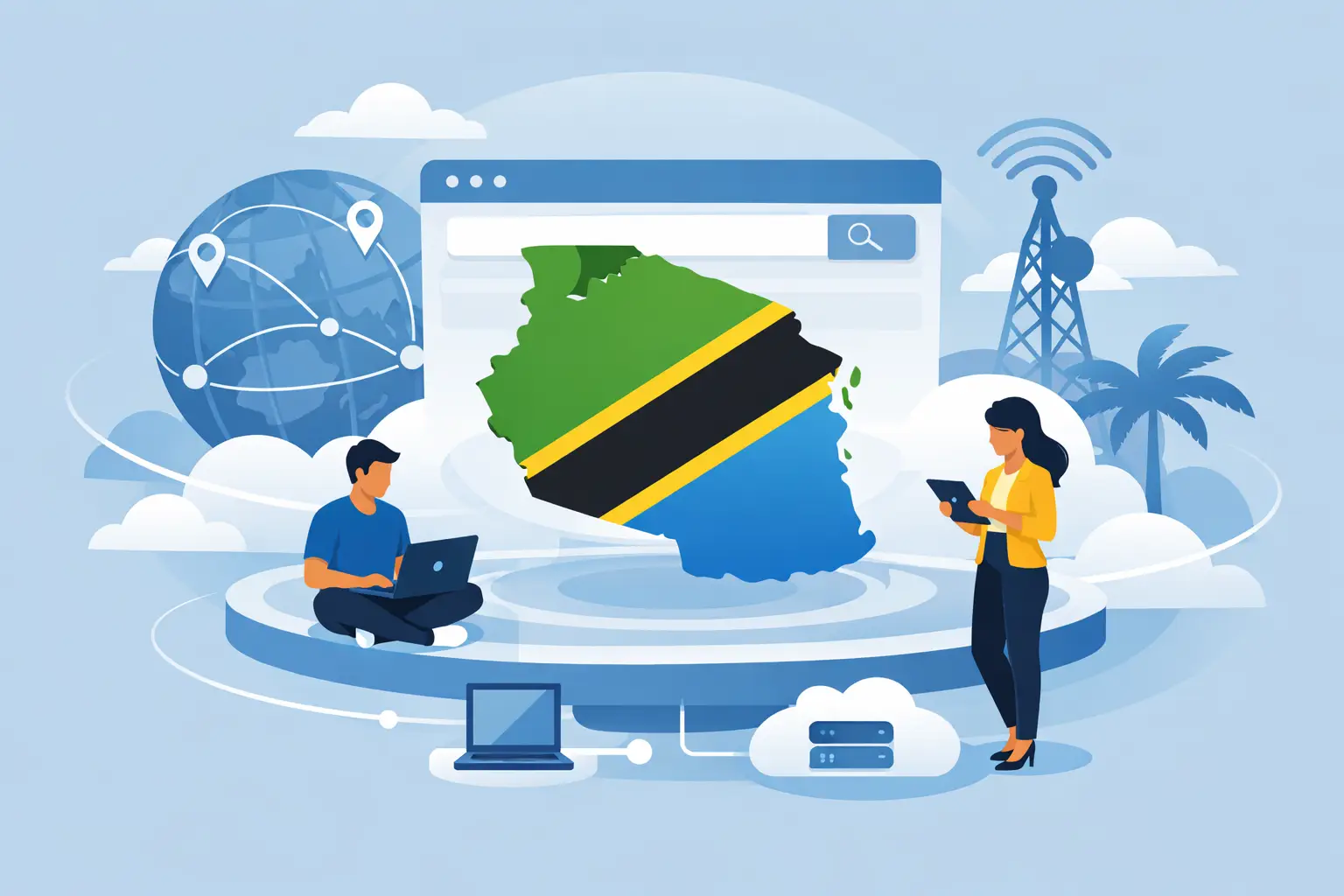
A tz domain tells users and search engines one thing fast: this site is tied to Tanzania. If your business serves customers there, or your brand needs a Tanzanian web identity, that signal matters. It affects trust, naming options, and sometimes how easily customers recognize you as local.
For most buyers, the real question is not what the extension stands for. It is whether a tz domain is the right operational choice for the site you plan to run.
What a tz domain means
The .tz extension is the country code top-level domain for Tanzania. Like other country-code domains, it is used by businesses, organizations, and individuals that want a clear national association.
That association can be useful. A local business may look more credible with a domain customers immediately connect to Tanzania. A regional service provider may use it to separate its Tanzanian presence from its global .com site. In some cases, it is also a practical naming option when the .com version is already taken.
A tz domain is not automatically better than a generic extension. It is better when geography is part of the decision.
When a tz domain makes sense
If your customers are in Tanzania, the case is straightforward. A local extension can improve recognition in search results, ads, invoices, and email addresses. It reduces ambiguity. A user seeing yourbrand.tz usually does not need to guess where you operate.
It also makes sense for businesses expanding into Tanzania with a dedicated local presence. That can include localized pricing, support hours, regional content, or country-specific services. In that setup, a tz domain helps separate local operations cleanly.
There are edge cases too. Some brands register country domains defensively to protect their name. Others use them for redirects, campaign pages, or market testing before launching a full local site. If that is your plan, make sure the registration and renewal effort is worth it. A domain you do not actively use still needs management.
When it may not be the right fit
If your audience is mainly US-based or global, a .com may still be the simpler default. Users recognize it instantly, and it avoids questions about whether your service is limited to one country.
This matters most for SaaS, online media, and export-focused businesses. If your market is broad, a country-code domain can feel narrower than your actual footprint. That does not make it wrong. It just means the branding signal may work against your growth plans.
Another factor is administration. Some country-code domains have stricter registration rules, local presence requirements, or slower processing than common generic domains. Before you commit, confirm the rules, expected approval time, and renewal process.
Registration and policy checks before you buy
Not all domain extensions behave the same way. With a tz domain, check the current registration policies before building a launch timeline around it.
Focus on a few basics. First, confirm whether the name is available at the second level or under a structured namespace. Second, verify whether individuals, foreign companies, and local entities are all eligible. Third, check whether supporting documents are required. Fourth, review renewal timing, grace periods, and transfer conditions.
These are not minor details. A domain is not just a label. It is part of your DNS, email routing, SSL setup, and brand continuity. If the registration model is more manual than what you are used to with .com, plan for that early.
SEO, trust, and local targeting
A tz domain can support local relevance, but it does not replace technical SEO or good content. You still need fast hosting, clean site structure, mobile usability, and pages that match what users search for.
What the domain does well is signaling locality. For users in Tanzania, that can increase confidence that pricing, support, and service availability are relevant to them. For search engines, it adds context. That is useful if your business is intentionally country-specific.
The trade-off is reach. If you want to rank broadly across multiple countries with one site, a country-code domain may require a more careful international setup. In that case, some operators keep a global domain for the main brand and use the local domain for a market-specific version.
Email, infrastructure, and operational fit
Choosing a tz domain also affects practical systems. Your email addresses, DNS records, and SSL certificates all depend on stable domain control. If you are moving a production site, make sure your registrar and hosting provider give you direct access to DNS management, renewal visibility, and transfer support.
This is where performance-focused buyers usually make the better decision. They treat the domain as infrastructure, not just branding. That means checking nameserver control, propagation expectations, WHOIS or registration data requirements, and how quickly support can resolve domain issues if something fails.
If you are pairing a tz domain with business email, ecommerce, or API endpoints, reliability matters more than novelty. A good name with poor operational handling creates avoidable downtime.
Should you buy a tz domain?
Buy it if Tanzania is core to your market, your brand needs a local identity, or you want to protect a name tied to that region. Skip it if your audience is mostly global and the local signal adds confusion.
For most operators, the decision comes down to targeting. If the domain helps users understand where you operate and what market you serve, it is doing its job. If it creates extra explanation, use a broader extension and keep your infrastructure simple.
Before registration, check policy, renewal terms, and DNS control. Then choose the extension that matches how your site actually needs to work.